
The foundation of every exceptional outfit begins where it meets the ground. While men obsess over suits, shirts, and accessories, the most discerning professionals know a truth that separates the well-dressed from the impeccably styled: your shoes communicate more about your taste, attention to detail, and understanding of quality than any other single element of your wardrobe.
In professional contexts, shoes are scrutinized during handshakes, noticed during presentations, and remembered long after meetings end. They signal whether you understand the difference between cost and value, trend and timelessness, adequate and exceptional. For Black men navigating spaces where every detail contributes to perception, professional footwear isn’t just about looking good—it’s strategic positioning.
The professional shoe landscape for 2025-2026 reflects broader menswear shifts: movement away from ultra-formal rigidity toward refined versatility, embrace of quality craftsmanship over logo-heavy luxury, and celebration of classic silhouettes reinterpreted through contemporary proportions and materials. This is the era of shoes that work as hard as you do—traveling seamlessly between contexts while maintaining impeccable standards.
The Professional Shoe Revolution: What’s Changed
Traditional professional footwear operated within narrow constraints: black cap-toe oxfords for business, brown brogues for smart casual, everything else relegated to weekend wear. This rigid hierarchy is dissolving, replaced by a more nuanced understanding of context, quality, and versatility.
From Formal to Versatile
The five-day-a-week office suit culture that demanded strict footwear hierarchies has largely disappeared. Modern professionals work hybrid schedules, travel frequently, attend diverse events, and move between formal presentations and creative collaborations within the same day. Footwear must adapt.
This doesn’t mean formality is dead—it means versatility has become the ultimate luxury. The professional who can wear the same exceptional pair of shoes to board meetings, client dinners, and airport lounges (while looking appropriate in all three contexts) has mastered modern style.
From Stiff to Comfortable
Traditional dress shoes prioritized formality over comfort, often requiring “breaking in” periods measured in weeks of painful wear. Contemporary professional shoes embrace construction techniques that deliver immediate comfort without sacrificing elegance.
Blake stitching, softer leathers, cushioned insoles, and flexible constructions make modern dress shoes genuinely wearable for 12-hour days involving walking, standing, and traveling. Comfort is no longer the enemy of professionalism—it’s a requirement.
From Logo-Heavy to Craft-Focused
The previous era celebrated recognizable luxury shoes adorned with prominent hardware, monograms, or distinctive styling. The shift is toward appreciating construction quality, material excellence, and timeless design that reveals its value through longevity rather than instant recognition.
A hand-welted oxford from a heritage shoemaker communicates more to those who understand footwear than a logo-covered luxury sneaker ever could. The signal changes from “I can afford expensive shoes” to “I understand what makes shoes valuable.”
The Essential Professional Shoe Wardrobe
Building a professional shoe wardrobe requires strategic investment in versatile, high-quality pieces that cover all necessary contexts while maintaining cohesive aesthetic.
The Foundation: Five Core Pairs
These five pairs handle 95% of professional situations:
1. Brown Leather Cap-Toe Oxfords or Whole-Cut Oxfords
This is your workhorse. Medium to dark brown leather, classic cap-toe or seamless whole-cut construction, Goodyear welted for durability and resoling capability.
Why Brown First: Brown works across more contexts than black in contemporary professional settings. It pairs with navy, charcoal, gray, beige, olive, and brown suits and separates. Brown reads slightly less formal than black, which actually makes it more versatile for hybrid professional environments.
Construction to Seek: Full-grain calfskin leather, leather sole (or combination leather/rubber), quality stitching, substantial but not chunky silhouette. Brands like Allen Edmonds, Meermin, or Carmina deliver excellent value. Step up to Crockett & Jones, Alden, or Edward Green for investment-grade options.
Budget: $300-800, depending on brand and construction quality.
Versatility: Works with business suits, blazer combinations,and smart casual outfits. The most-worn shoe in most professional wardrobes.
2. Black Leather Cap-Toe Oxfords
Traditional business formality still requires black shoes: conservative industries, formal events, funerals, weddings, and situations demanding maximum formality.
Why You Need Them: Despite brown’s versatility, certain contexts demand black. Better to own one exceptional black pair worn 20% of the time than compromise in situations requiring them.
Construction Standards: Same quality expectations as brown shoes—full-grain leather, Goodyear welted, cap-toe or whole-cut styling.
Budget: $300-800.
Versatility: Business formal contexts, black-tie adjacent events, very conservative professional settings.
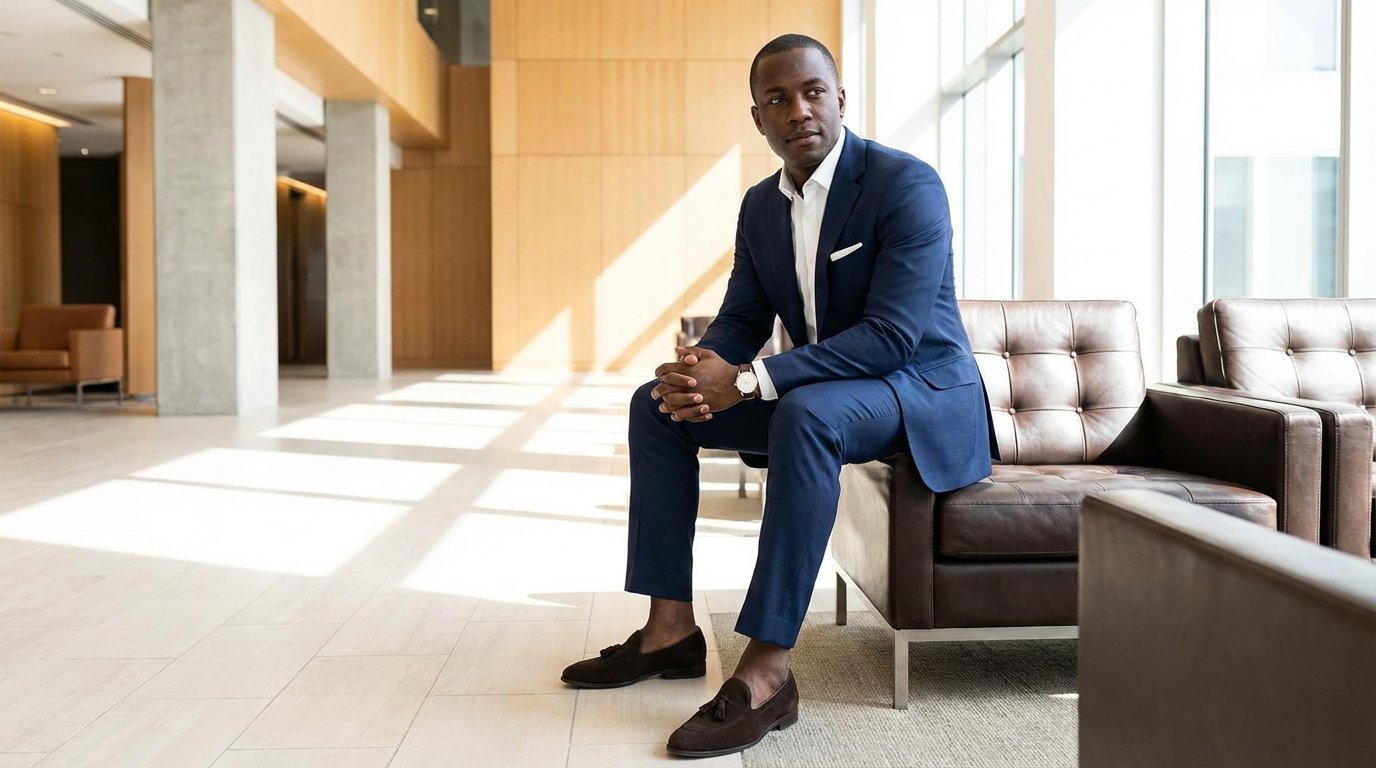
3. Brown Suede Loafers
Loafers bridge business casual and smart casual, offering refined elegance without Oxford formality. Suede provides textural interest and seasonal versatility.
Style Options: Penny loafers (classic, clean), tassel loafers (traditional, slightly preppy), or horsebit loafers (Italian elegance). Choose based on personal aesthetic preference.
Why Suede: Suede softens formality while maintaining sophistication. Brown suede works year-round and pairs beautifully with everything from suits to dark jeans.
Cultural Connection: Consider Black-owned brands like Blackstock & Weber, which produce luxury loafers specifically designed with Black men’s aesthetic preferences and foot shapes in mind. Supporting Black-owned businesses while getting exceptional quality isn’t a compromise—it’s strategic alignment.
Budget: $300-600.
Versatility: Business casual offices, smart casual events, travel, and creative professional settings. Cannot wear with most formal suits, but handles everything else.
4. Minimal Leather Sneakers
Contemporary professional wardrobes require refined sneakers for travel, casual meetings, creative workplaces, and off-duty professional moments.
What to Look For: Leather (not canvas), minimal design (no busy colors or patterns), quality construction, white or neutral tones. These aren’t athletic shoes—they’re leather sneakers constructed like dress shoes but styled casually.
Brands to Consider: Common Projects (the gold standard), Koio, Greats, Oliver Cabell, or Axel Arigato. Look for full-grain leather, Blake-stitched or cup-sole construction, and understated branding.
When to Wear: Business casual offices with relaxed dress codes, airport travel, weekend professional events, tech/creative industries, casual client meetings in contemporary spaces.
Budget: $200-500.
Versatility: Pairs with everything from tailored trousers to dark jeans. Essential for modern professional life.
5. Brown Leather or Suede Chelsea Boots
Boots handle cold weather, add visual interest, and bridge formal and casual with a distinctive silhouette.
Why Chelsea specifically: Chelsea boots’ sleek, elastic-sided profile works under tailored trousers without the bulk of lace-up boots. They slip on easily (crucial when traveling), look sharp, and handle diverse weather.
Material Choice: Brown leather for maximum versatility and year-round use. Suede for texture and fall/winter focus. Chocolate or tobacco tones work best.
Budget: $250-600.
Versatility: Fall/winter professional wear, travel in cold climates, smart casual events, transitional weather.
Beyond the Foundation: Expanding Strategically
After establishing the core five pairs, expansion should address specific lifestyle needs and style preferences:
Dark Burgundy/Cordovan Oxfords or Derbies
Cordovan leather (horse leather from shell cordovan) develops exceptional patina, requires less maintenance than calfskin, and offers a unique depth of color. Burgundy or oxblood provides subtle color variation from standard brown while maintaining professional appropriateness.
When Valuable: For those who’ve mastered basics and want distinctive pieces that signal a deep understanding of footwear quality.
Double Monk Strap Shoes
Two-buckle monk straps offer personality and Continental elegance. They’re more casual than oxfords but more interesting than loafers.
When to Wear: Business casual environments, creative industries, European business contexts where they’re more accepted.
Risk Factor: Monk straps read as “trying” in very conservative environments. Know your context.
Driving Loafers or Moccasins
Ultra-casual loafers with rubber pebble soles and softer construction for maximum comfort in casual professional settings.
Best Use: Travel, extremely casual workplaces, off-duty professional events.
Limitation: Too casual for most business contexts but valuable for specific situations.
Desert Boots or Chukka Boots
Suede ankle boots offering casual refinement for smart casual environments.
Best Use: Creative industries, weekend professional events, fall/winter casual wear.
Limitation: Too casual for traditional business, but perfect for contemporary smart casual.
Construction Quality: What Separates Good from Great
Understanding construction fundamentals helps identify quality and justify premium pricing.
Goodyear Welt Construction
The gold standard for dress shoes. A strip of leather (the welt) is stitched to both the upper and the sole, creating a structure that:
- Allows for multiple resolings (extending shoe life to decades)
- Provides water resistance
- Creates stability and support
- Maintains shape over time
Visual Indicator: Visible stitching along the perimeter where the sole meets the upper.
Why It Matters: A $500 Goodyear welted shoe resoled three times over 20 years costs less than buying $200 cemented shoes every three years, while looking better throughout.
Blake Stitch Construction
The upper is stitched directly to the sole from inside the shoe. Creates a sleeker profile than the Goodyear welt with nearly equivalent durability.
Advantages: More flexible, lighter weight, sleeker silhouette—ideal for dress shoes and minimal sneakers.
Limitation: Slightly less water-resistant than the Goodyear welt, typically only one or two resolings are possible.
Best Use: Dress shoes where sleek profile matters, high-quality sneakers.
Cemented Construction
The upper is glued to the sole rather than stitched. Cheaper, faster production but significantly shorter lifespan.
When Acceptable: Budget-conscious purchases, trendy items with short relevance windows.
When to Avoid: Investment pieces meant to last years. Professional shoes should be stitched, not glued.
Hand-Welted and Bespoke Construction
The ultimate in shoe construction—everything done by hand, typically in bespoke or high-end ready-to-wear.
Investment Level: $1,000-3,000+ per pair.
When Justified: When you’ve mastered everything else and want absolute pinnacle quality. For most professionals, excellent Goodyear welted shoes at $400-800 deliver 95% of the benefit at 30% of the cost.
Leather Quality: Understanding Materials
Not all leather is equal. Material quality fundamentally affects appearance, comfort, durability, and value.
Full-Grain Calfskin
The highest quality leather, using the entire grain layer without sanding or correction. Shows natural characteristics, develops beautiful patina, and lasts decades with proper care.
Visual Characteristics: Slight natural variations, pores visible under close inspection, rich depth of color.
Why It Matters: Full-grain leather breathes better, molds to your foot, ages gracefully, and maintains structure longer than corrected or split leathers.
Suede and Nubuck
The flesh side of leather is buffed to create a soft, napped texture. Suede is more casual than smooth leather but equally durable when properly maintained.
Advantages: Textural interest, seasonal appropriateness, and often more comfortable immediately than smooth leather.
Maintenance: Requires suede-specific care products and protection from water/salt.
Shell Cordovan
Horse leather from a specific membrane is exceptionally durable and developing unique patina. Smoother than calfskin with almost a plastic-like sheen when new that mellows beautifully over the years.
Investment Level: Cordovan shoes typically cost $600-1,200.
Why Consider: For shoe enthusiasts who appreciate distinctive materials and extreme longevity.
Corrected Grain and Split Leather
Lower-quality leathers where the surface has been sanded and embossed with an artificial grain pattern.
Visual Indicator: Unnaturally uniform appearance, plasticky feel, embossed rather than natural grain.
When to Avoid: Professional investment pieces. These leathers don’t breathe as well, don’t develop patina, and don’t last as long.
Color Strategy: Building a Cohesive Collection
Strategic color selection ensures every shoe pairs with multiple outfits while avoiding redundancy.
The Progression:
Start: Medium brown leather oxfords (most versatile)
Add: Black leather oxfords (covers formal needs)
Third: Brown suede loafers (adds texture and casual refinement)
Fourth: White/cream minimal sneakers (handles contemporary casual)
Fifth: Brown leather/suede Chelsea boots (seasonal coverage)
Expand: Burgundy/cordovan shoes, lighter tan shoes, dark brown alternatives
Why This Order Works:
The first three pairs cover 80% of professional situations. Fourth and fifth address modern professional realities (travel, casual contexts). Additional pairs add variety without creating gaps.
Color Coordination Rules:
Brown Shoes: Work with navy, charcoal, gray, beige, olive, brown, and cream clothing. Do not work with black clothing.
Black Shoes: Work with black, charcoal, and gray clothing. Work with the Navy in formal contexts. Look awkward with brown, beige, olive, and earth tones.
Burgundy/Cordovan Shoes: Work with navy, charcoal, and gray clothing. Often work with brown tones when similar depth. Provide color interest while maintaining professionalism.
Tan/Lighter Brown Shoes: Work with lighter suits and separates—beige, cream, light gray, khaki. Too casual for very dark suits.
The Black Skin Advantage: Colors That Pop
Certain shoe colors create a particularly striking visual impact against Black skin tones—use this to your advantage.
Rich Browns and Cognacs
Warm brown tones create beautiful tonal harmony with Black skin, offering sophistication without the starkness of black shoes.
A tobacco brown oxford against brown skin in navy trousers creates cohesive elegance that photographs beautifully and reads as expensive in person.
Deep Burgundy and Oxblood
These colors provide subtle richness that complements deeper skin tones while maintaining professional appropriateness.
Burgundy shoes suggest contemporary sophistication—someone who understands color beyond basic brown and black.
Contrast Opportunities
White or cream minimal sneakers create a clean, modern contrast. The visual pop of white leather against Black skin in well-fitted dark jeans or trousers delivers contemporary style.
Lighter tan or cognac shoes in summer weights pair beautifully with cream, beige, or light gray suits for warm-weather professional events.
Fit and Sizing: Getting It Right
Improperly fitted shoes undermine every other quality consideration.
Professional Fitting Essentials:
Measure Both Feet: Feet are rarely identical. Buy for the larger foot and use insoles or tongue pads in the smaller if needed.
Afternoon Measurement: Feet swell throughout the day. Measure and fit shoes in the afternoon or evening for accurate sizing.
Width Matters: US sizing includes width (D=standard, E=wide, B=narrow). Proper width prevents blisters, provides support, and improves appearance.
Toe Box Test: You should be able to wiggle your toes comfortably. A thumb-width distance between the longest toe and the shoe end prevents jamming.
Heel Lock: The heel should stay put when walking. Excessive heel slip causes blisters and indicates improper fit.
Brand Variation: Sizing varies by manufacturer and last (the form around which shoes are constructed). Never assume your size—always try or verify measurements.
Break-In Expectations:
Quality leather shoes require break-in, but should never be painful. Expect 3-5 wears before shoes feel “broken in,” but if pain continues beyond a week of regular wear, the fit is wrong.
Suede typically breaks in faster than smooth leather. Sneakers should feel comfortable immediately.
Care and Maintenance: Protecting the Investment
Professional shoes at $300-800 per pair require proper care to justify their cost and achieve their potential lifespan.
Daily Maintenance:
Shoe Trees: Insert cedar shoe trees immediately after removing shoes. This absorbs moisture, maintains shape, and prevents creasing. Budget $25-40 per pair of quality cedar trees.
Rotation: Never wear the same shoes two days consecutively. Leather needs 24 hours to dry completely from foot moisture. A minimum three-pair rotation extends shoe life dramatically.
Brushing: Quick brush with a horsehair brush after each wear removes dirt and dust before it damages the leather.
Weekly Care:
Inspection: Check for scuffs, stains, or damage requiring immediate attention.
Spot Cleaning: Address any stains or marks before they set.
Monthly/Quarterly Maintenance:
Conditioning: Apply leather conditioner to smooth leather shoes to prevent drying and cracking. Frequency depends on climate—more in dry environments, less in humid.
Polishing: Polish smooth leather shoes to restore color and create a protective layer. This is optional for suede.
Suede Brushing: Use a suede brush to restore nap and remove dirt embedded in the texture.
Annual Professional Care:
Resoling: When soles show significant wear, professional resoling extends life indefinitely for Goodyear welted shoes. Budget $100-150 for quality resoling.
Deep Cleaning and Restoration: Professional shoe care can address significant scuffs, color restoration, and structural repairs.
Weather Protection:
Rain: Quality leather handles occasional rain but shouldn’t be soaked. If shoes get wet, stuff with newspaper and air-dry slowly (never near heat). Insert shoe trees once mostly dry.
Snow/Salt: Extremely damaging to leather. Use protective sprays before winter, wipe salt immediately after exposure, and consider dedicated winter shoes for harsh climates.
Protective Sprays: Waterproofing sprays for suede, protective sprays for smooth leather. Reapply every few months or after cleaning.
Context Mastery: Reading the Room
Professional success requires knowing which shoes work in which contexts.
Traditional Business Formal:
Law, finance, consulting, conservative corporations, and formal client presentations.
Required: Black or dark brown cap-toe oxfords. No substitutes.
Acceptable: High-quality derbies in black or brown for slightly less formal situations.
Never: Loafers, monk straps, brogues with excessive perforation, any sneakers, boots.
Modern Business Casual:
Tech companies, creative agencies, contemporary corporations, and most professional offices.
Appropriate: Brown oxfords or derbies, quality loafers (leather or suede), monk straps, clean Chelsea boots.
Acceptable: Minimal leather sneakers in many contexts—read company culture.
Avoid: Athletic sneakers, heavily casual shoes, flip-flops, sandals.
Smart Casual Professional:
Networking events, industry conferences, business dinners, and professional social events.
Perfect: Suede loafers, brown leather derbies, quality Chelsea boots, refined monk straps.
Acceptable: Minimal leather sneakers if the event skews contemporary, brown oxfords if unsure.
Avoid: Athletic shoes, overly casual footwear, extremely formal black oxfords (overdressed).
Travel and Hybrid Work:
Airports, coworking spaces, video calls with in-person meetings.
Ideal: Minimal leather sneakers (comfortable for travel, professional enough for surprise meetings), slip-on Chelsea boots, quality loafers.
Strategic: Wear comfortable shoes for travel, pack or wear dressier options for meetings.
Creative Industries:
Advertising, design, media, entertainment, fashion.
Freedom: Much wider latitude. Interesting sneakers, distinctive boots, and bold shoe choices are often appreciated.
Guideline: Quality and intentionality matter more than formality. A $400 pair of unique sneakers reads better than cheap dress shoes in these contexts.
Seasonal Considerations: Year-Round Strategy
Professional shoe wardrobes should account for seasonal variation.
Spring/Summer (April-September):
Prioritize: Lighter-weight leathers, unlined or half-lined construction, lighter brown tones, and suede shoes.
Featured Pairs: Tan or lighter brown oxfords, unlined suede loafers, minimal sneakers, and unlined leather shoes.
Avoid: Heavy leather boots, dark winter shoes in very warm weather.
Fall/Winter (October-March):
Prioritize: Full-grain leather, boots, darker tones, weather-resistant options.
Featured Pairs: Dark brown or burgundy oxfords, Chelsea boots, suede shoes (with protection), lined leather shoes.
Weather Strategy: Dedicated winter/rain shoes in harsh climates to protect investment pieces.
Year-Round Workhorses:
- Medium brown cap-toe oxfords
- Black cap-toe oxfords
- Brown leather loafers
- Minimal leather sneakers
These four pairs handle all seasons when properly maintained and rotated.
Budget Strategy: Where to Invest, Where to Save
Professional footwear requires strategic budget allocation.
Investment Priority (Highest to Lowest):
1. Brown Cap-Toe Oxfords ($400-800): Your most-worn shoe deserves the highest investment. This is where to buy the best possible quality.
2. Black Cap-Toe Oxfords ($300-600): Worn less frequently but required for specific contexts. Good quality essential, but slightly lower budget acceptable.
3. Brown Suede Loafers ($300-600): High-use item in business casual contexts. Quality matters, but less critical than Oxfords.
4. Chelsea Boots ($250-500): Seasonal item worn less frequently. Good quality is sufficient.
5. Minimal Sneakers ($200-400): Most contemporary category with shorter style lifecycles. Mid-tier quality adequate.
The Total Investment:
Complete five-pair professional wardrobe: $1,650-3,300.
This seems significant until compared to alternatives:
- Buying cheaper shoes ($150-200), replaced every 1-2 years
- Over 10 years: $750-2,000 per pair = $3,750-10,000 total
- Quality shoes with proper care: $1,650-3,300 total overthe same period
Plus: Quality shoes look better throughout their lifespan, can be resoled rather than replaced, and signal professionalism that impacts career opportunities.
Smart Budget Approaches:
Build Over Time: Buy one exceptional pair every 2-3 months rather than complete a wardrobe immediately.
Sales and Outlet Shopping: Many premium brands have seasonal sales. Allen Edmonds, Meermin, and others offer 30-40% off during sales.
Seconds and Factory Stores: Minor cosmetic imperfections significantly reduce price without affecting function. Allen Edmonds seconds, Alden seconds, etc.
Pre-Owned Market: Barely-worn luxury shoes on eBay, Grailed, or consignment stores offer access to $800 shoes at $300-400. Ensure an authentic seller and the ability to verify condition.
Black-Owned Shoe Brands: Supporting While Elevating
Supporting Black-owned footwear brands aligns values with quality while ensuring your money circulates within the community.
Blackstock & Weber
Premium loafers, oxfords, and boots designed specifically for Black men. Based in New York, founded by Chris Echevarria, focused on combining traditional craftsmanship with contemporary style.
Price Range: $395-595
Standout Offerings: Loafer collections in various styles, quality leather, and distinctive detailing. Designed with Black men’s aesthetic preferences and proportions in mind.
Why Consider: Supporting Black-owned businesses while getting genuinely excellent shoes designed for you. Not compromise—strategic alignment.
Brother Vellies
Aurora James’s brand produces handcrafted shoes blending African craft traditions with contemporary design. While known for women’s shoes, men’s offerings combine heritage techniques with modern style.
Price Range: $395-695
Standout Offerings: Distinctive designs honoring African craft traditions, sustainable practices, unique aesthetic.
Why Consider: Supporting Black female entrepreneurs while accessing truly distinctive footwear.
Other Black-Owned Options:
Emerging brands continuously enter the market. Research current options in:
- Luxury sneakers
- Contemporary dress shoes
- Heritage-inspired boots
- Sustainable footwear
Supporting Black-owned brands isn’t charity—it’s investing in businesses that understand Black men’s needs, aesthetics, and cultural context while delivering quality, justifying premium pricing.
The Psychology of Professional Footwear
Shoes communicate beyond aesthetics—they signal competence, attention to detail, and understanding of professional standards.
First Impressions:
People notice shoes during initial handshakes and introductions, often subconsciously assessing quality and appropriateness.
Scuffed, worn, or inappropriate shoes create negative impressions difficult to overcome. Impeccable shoes establish credibility before you speak.
The Halo Effect:
Excellent shoes create positive assumptions about other areas of competence. If you maintain your shoes this well, you probably maintain everything this well.
This effect particularly impacts Black professionals fighting assumptions. An impeccable presentation removes ammunition from those predisposed to doubt your competence.
Confidence Foundation:
Knowing your shoes are appropriate, high-quality, and impeccably maintained provides psychological confidence. You’re not worried about your appearance—you’re focused on performance.
This subtle confidence shift impacts how you carry yourself, speak, and engage in high-stakes professional situations.
Common Professional Shoe Mistakes
Wearing Athletic Shoes in Business Contexts:
Running shoes, basketball sneakers, and athletic footwear have no place in professional business contexts unless your profession is athletic.
Minimal leather sneakers are the casual extreme—actual athletic shoes signal either ignorance or disregard for professional standards.
Neglecting Maintenance:
Scuffed, unpolished, worn shoes undermine otherwise excellent presentation. No excuse for poor shoe condition in professional contexts.
Wrong Color Coordination:
Black shoes with a brown belt. Brown shoes with black trousers. These mismatches signal fashion illiteracy even to those with minimal style knowledge.
Prioritizing Trend Over Appropriateness:
That bold, distinctive shoe you love might be inappropriate for your professional context. Know your industry and audience.
Cheap Shoes in Important Moments:
Job interviews, major presentations, crucial meetings—these are not occasions for budget footwear. Your shoes should match the significance of the moment.
Ignoring Fit:
Shoes that don’t fit properly cause discomfort, look awkward, and undermine confidence. Proper fit is non-negotiable.
The Future of Professional Footwear
Sustainability Focus:
Increasing emphasis on sustainable materials, ethical production, and longevity over disposability. Quality construction aligns perfectly with sustainability—shoes lasting decades rather than seasons.
Technology Integration:
Advanced cushioning systems, performance materials, and construction innovations make dress shoes genuinely comfortable for all-day wear without sacrificing elegance.
Customization Accessibility:
Made-to-measure and bespoke options are becoming more accessible through technology, enabling remote measurement and virtual fitting. Expect more affordable custom and semi-custom options.
Cultural Fusion:
Greater incorporation of African diaspora aesthetic elements, craft traditions, and design sensibilities into contemporary professional footwear.
Versatility Premium:
Shoes bridging multiple contexts—dress casual enough for offices but refined enough for meetings—will command a premium as hybrid work becomes standard.
The Bottom Line
Professional footwear isn’t about following rules—it’s about strategic investment in quality pieces that communicate competence, enable performance, and withstand the demands of ambitious professional lives.
For Black men specifically, impeccable shoes remove obstacles. They eliminate easy critiques, signal serious professional standards, and demonstrate the attention to detail that translates to career advancement.
Start with foundations: brown oxfords, black oxfords, brown loafers. Ensure quality construction, proper fit, and commit to maintenance. These three pairs handle most professional situations while establishing your style baseline.
Expand strategically based on lifestyle needs: add minimal sneakers for travel and contemporary contexts, Chelsea boots for seasonal coverage, distinctive pieces as your wardrobe and budget mature.
Remember: your shoes are often the last thing you put on but the first thing people notice. They’re the foundation—literally and figuratively—of every exceptional outfit. Invest accordingly.
Quality shoes, properly maintained, last decades while looking better and feeling more comfortable with each wear. They’re not expenses—they’re investments in professional credibility that compound returns over careers.
Step intentionally. Step confidently. Step into shoes worthy of where you’re going.