
Affiliate Disclosure: Some links in this post may be affiliate links. If you purchase them, Black Men In Fashion may earn a small commission at no additional cost to you. We only recommend styles and products we genuinely stand behind.
Can you believe that one of the most powerful style statements a Black man can make costs less than $50? The right hat doesn’t just complete an outfit—it communicates who you are before you say a single word. From the structured authority of a fedora to the cultural currency of a fitted cap, hats have always been a cornerstone of Black men’s fashion, rooted in history, elevated by culture, and refined by personal expression. This is not just a style guide. This is a professional analysis of how Black men wear hats better than anyone else on the planet—and how to do it with even more intention.
Why Hats Matter Differently for Black Men
 Before we get into the styles, let’s be honest about the cultural weight hats carry in our community. The Kangol on Samuel L. Jackson. The Stacy Adams fedora at church on Sunday. The fitted cap tilted just right on a Friday night. These aren’t fashion accidents—they are deliberate acts of identity. Black men have used hats as a form of self-definition for generations, from the zoot suit era to the Harlem Renaissance to hip-hop’s golden age. When we talk about hat styling for Black men, we are talking about a living, breathing cultural tradition that deserves to be treated with the same seriousness as any haute couture conversation.
The Fedora & Structured Hat: Authority Meets Elegance
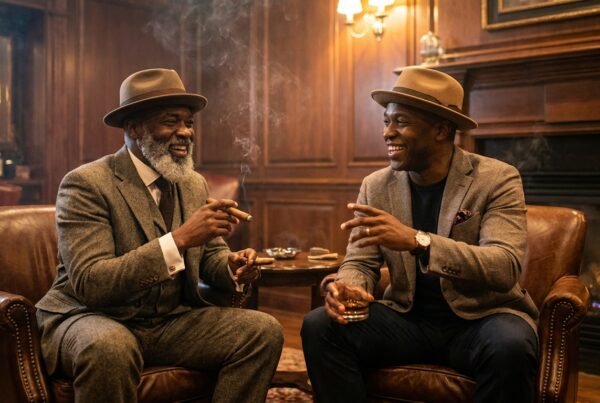
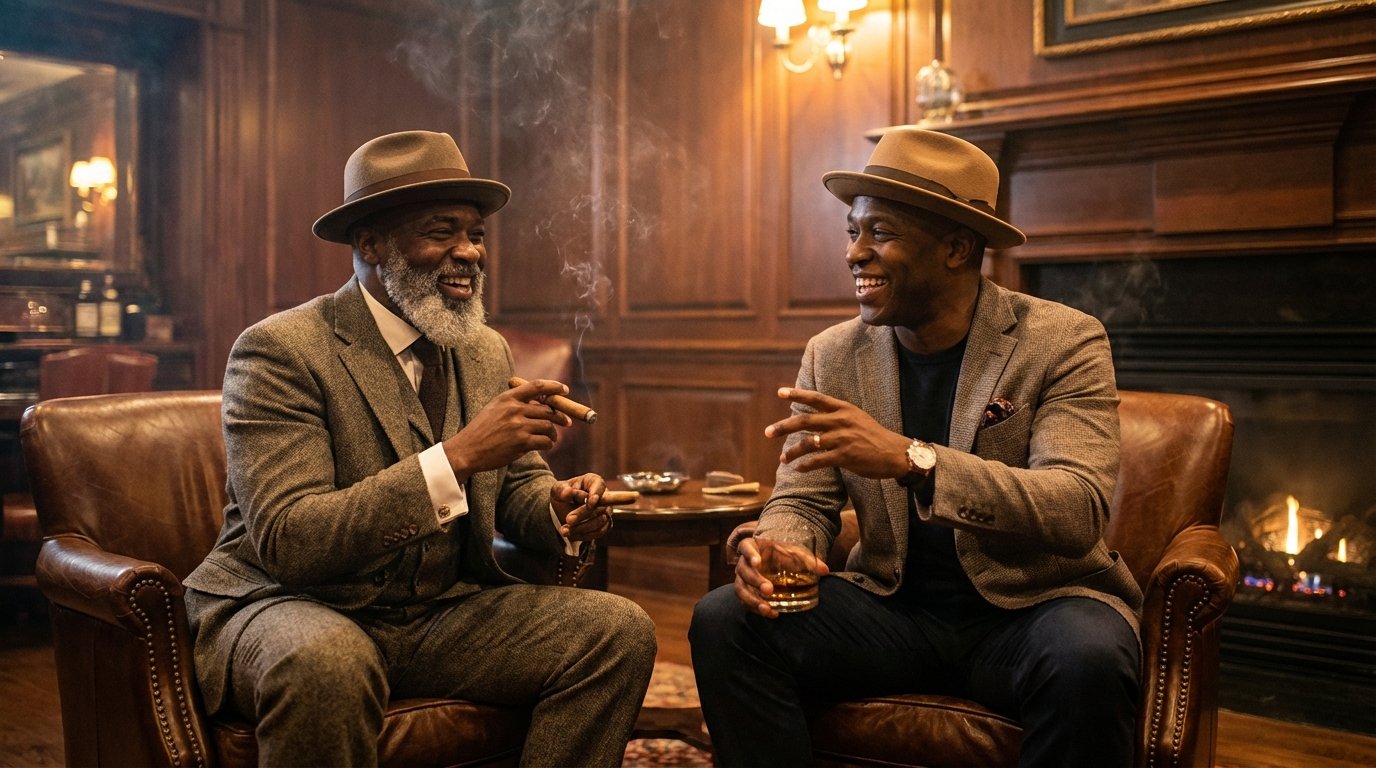
The fedora is perhaps the most misunderstood hat in modern menswear. Worn wrong, it reads “costume.” Worn right, it is one of the most commanding accessories in a Black man’s wardrobe.
Face Shape Guidance: Fedoras work best on oval, oblong, and diamond-shaped faces. If your face is rounder, opt for a higher crown to add length. If you have a broader forehead, a medium brim between 2.5 and 3 inches creates balance without overwhelming your features.
The Professional Analysis: For darker melanin tones, wide-brim fedoras in cognac, camel, chocolate brown, and deep burgundy are extraordinarily complementary. These earth tones create a warm contrast that lighter skin tones simply cannot pull off the same way. Own that advantage. For medium tones, slate grey, olive, and dusty rose fedoras create a sophisticated cool that photographs beautifully. For deeper skin tones, black, ivory, and rich jewel tones like forest green or cobalt blue create a striking visual impact that commands any room.
How to Style It: Pair a structured wool fedora with a tailored overcoat and Chelsea boots for a power look. A linen fedora over a relaxed linen suit in summer is the definition of effortless authority. Never crush the crown. Never leave the price tag on the brim. And please—invest in a quality hat. A good fedora from Stetson, Bailey, or Akubra will outlast a dozen fast-fashion alternatives.
The Fitted Cap & Snapback: Cultural Currency
No hat in the history of menswear has done more cultural work than the fitted cap. Born in baseball, adopted by hip-hop, and now a global fashion staple, the fitted and the snapback represent the most direct line between Black American culture and mainstream fashion—even when mainstream fashion forgets to give us credit for it.
The Professional Analysis: The fitted cap is one of the few hats that works across virtually every melanin tone without adjustment. The key variables are crown height and brim curvature. A high-profile fitted cap—think New Era 59Fifty—adds height and works beautifully on men with shorter or closer-cut hair. A low-profile cap sits closer to the head and complements locs, twists, and larger hair beautifully, keeping the silhouette clean.
Face Shape Guidance: Snapbacks with structured, flat brims work well on square and oval faces. If you have a heart-shaped face, look for snapbacks with a slightly curved brim to soften the visual weight at the top. Round faces benefit from caps worn slightly higher on the head rather than pulled down low.
How to Style It: The fitted cap has graduated fully into high fashion. Wear a premium snapback with a tailored bomber jacket and slim trousers for a look that bridges streetwear and sophistication. A vintage team cap with a crisp white tee, dark denim, and clean leather sneakers is a timeless formula. For a more elevated take, try a tonal look — a black cap with an all-black outfit or a cream cap anchoring earth tones — for a cohesive, intentional finish.
Cultural Note: Your cap represents more than a team. It can represent a city, a memory, a movement, or a moment. Choose with intention.
The Bucket Hat: The Comeback King
If the fedora is authority and the fitted is culture, the bucket hat is freedom. Once dismissed as a relic of 90s nostalgia, the bucket hat has staged one of the most impressive fashion comebacks of the 21st century — and Black men have been leading that revival every step of the way.
The Professional Analysis: The bucket hat is inherently casual, but that does not mean it cannot be styled with precision. The key is fabric and proportion. A structured bucket hat in canvas, denim, or nylon reads more polished than a floppy terry cloth version. A tighter fit sits more intentionally on the head. The brim should frame your face, not hide it.
Face Shape Guidance: The bucket hat is one of the most forgiving styles for face shape. Wider brims soften angular features on square or diamond faces. A more structured, narrower brim keeps rounder faces from feeling overwhelmed. The downward slope of the brim naturally draws attention to cheekbones and jawline, which is an advantage most men never think to use.
Melanin & Color Notes: This is where Black men genuinely win. The bucket hat in bold, saturated colors—cobalt, tangerine, cherry red, and forest green—looks extraordinary against darker skin tones in a way that is simply undeniable. Pastel bucket hats create a beautiful, unexpected softness on deep skin tones that has become a signature of modern Black men’s fashion aesthetics. For medium tones, earthy neutrals and camo prints are incredibly versatile. For lighter complexions, rich jewel tones and bold patterns create the most visual impact.
How to Style It: A bucket hat over a vintage graphic tee, wide-leg cargo trousers, and retro sneakers is the formula for modern streetwear done right. For a more polished take, a linen bucket hat over a short-sleeve button-up and tailored shorts is a summer look that travels from brunch to the gallery without missing a step. Layer it over locs, braids, or a fresh fade—the bucket hat respects all hair.
The Rules That Actually Apply to All Hats
After years of style analysis, a few universal truths emerge for Black men wearing hats at any level of formality.
First, fit is everything. A hat that is too large destroys any silhouette. A hat that is too small reads as an afterthought. Know your head measurement—it is typically between 21 and 24 inches for most men—and buy accordingly.
Second, your hat should have a conversation with your shoes. You do not need to match colors, but your hat and shoes should occupy the same stylistic universe. A structured fedora does not belong with slides. A vintage snapback does not belong with Oxford dress shoes unless you are deliberately and skillfully subverting the contrast.
Third, condition your hats. Store them properly. A crushed hat communicates carelessness, and carelessness is the enemy of style.
Fourth, know when to take it off. A hat worn indoors during a formal setting—a dinner, a meeting, a ceremony—communicates a lack of situational awareness. Read the room.
Finally, wear your hat with confidence that is rooted in knowledge. The most stylish men in any room are not just wearing the right things—they know why they’re wearing them. That knowledge is what separates fashion from style.
The Bottom Line
Hats are not accessories. For Black men, there are statements. They carry history, signal identity, and when worn with intention, communicate a level of self-awareness that no other garment can replicate. Whether you’re reaching for a fedora on your way to a business dinner, a fitted cap before heading to the studio, or a bucket hat for a Saturday afternoon, the question to always ask yourself is simple: Does this hat reflect who I am or who I’m trying to be?
At Black Men In Fashion, we believe those two answers should always be the same.