
The landscape of professional menswear is undergoing a fundamental shift, and Black business men are at the forefront of this transformation. No longer confined to the rigid uniformity of traditional corporate dress codes, today’s Black professionals are crafting a visual language that honors heritage, celebrates individuality, and commands respect—all while maintaining the authority their positions demand.
This isn’t about abandoning professionalism for flash. It’s about recognizing that excellence wears many faces, and that cultural expression and business acumen aren’t mutually exclusive. From boardrooms in Manhattan to tech campuses in Austin, Black businessmen are rewriting the rules of what power dressing looks like.
The Evolution of Power Dressing
Traditional business attire was designed around a specific aesthetic—one that rarely accounted for the diversity of bodies, backgrounds, or cultural expressions that exist in modern professional spaces. The navy suit, white shirt, and conservative tie became a uniform precisely because it erased individual identity in favor of institutional conformity.
But conformity has costs. When everyone dresses identically, distinction comes solely from title and tenure rather than vision and capability. For Black professionals navigating spaces where they’re often underrepresented, this erasure can feel particularly acute—a visual submission to standards that weren’t created with them in mind.
The current evolution doesn’t reject professionalism. Instead, it expands the definition. Today’s Black business leaders understand that commanding a room requires confidence more than conformity, and that authenticity often proves more powerful than assimilation.
Trend 1: The Return of Texture and Pattern
Walk into any major corporate office today, and you’ll see a shift. Black businessmen are embracing textured fabrics and sophisticated patterns that add visual interest without sacrificing polish.
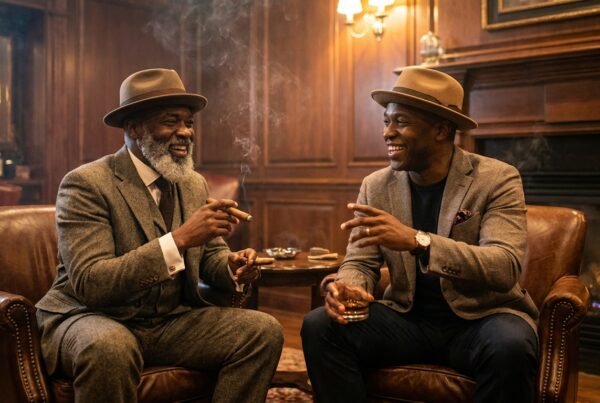
What It Looks Like: Herringbone suits in charcoal or navy. Subtle glen plaid patterns. Textured wool blazers with a slight sheen. Silk-cotton blend suiting that catches light differently than standard worsted wool. These aren’t loud patterns demanding attention—they’re refined details that reward closer inspection.
Why It Works: Texture adds dimension to your appearance without requiring bold colors or dramatic cuts. A textured navy blazer over solid trousers reads more interesting than a flat suit while maintaining professional credibility. For video calls and presentations, texture prevents you from appearing as a flat, forgettable silhouette.
How to Execute: Start with one textured piece—a blazer in subtle herringbone or birdseye pattern. Pair it with solid trousers and a crisp shirt. Once comfortable, experiment with mixing textures: a tweed sport coat over a fine-gauge knit tie, flannel trousers with a smooth cotton shirt.
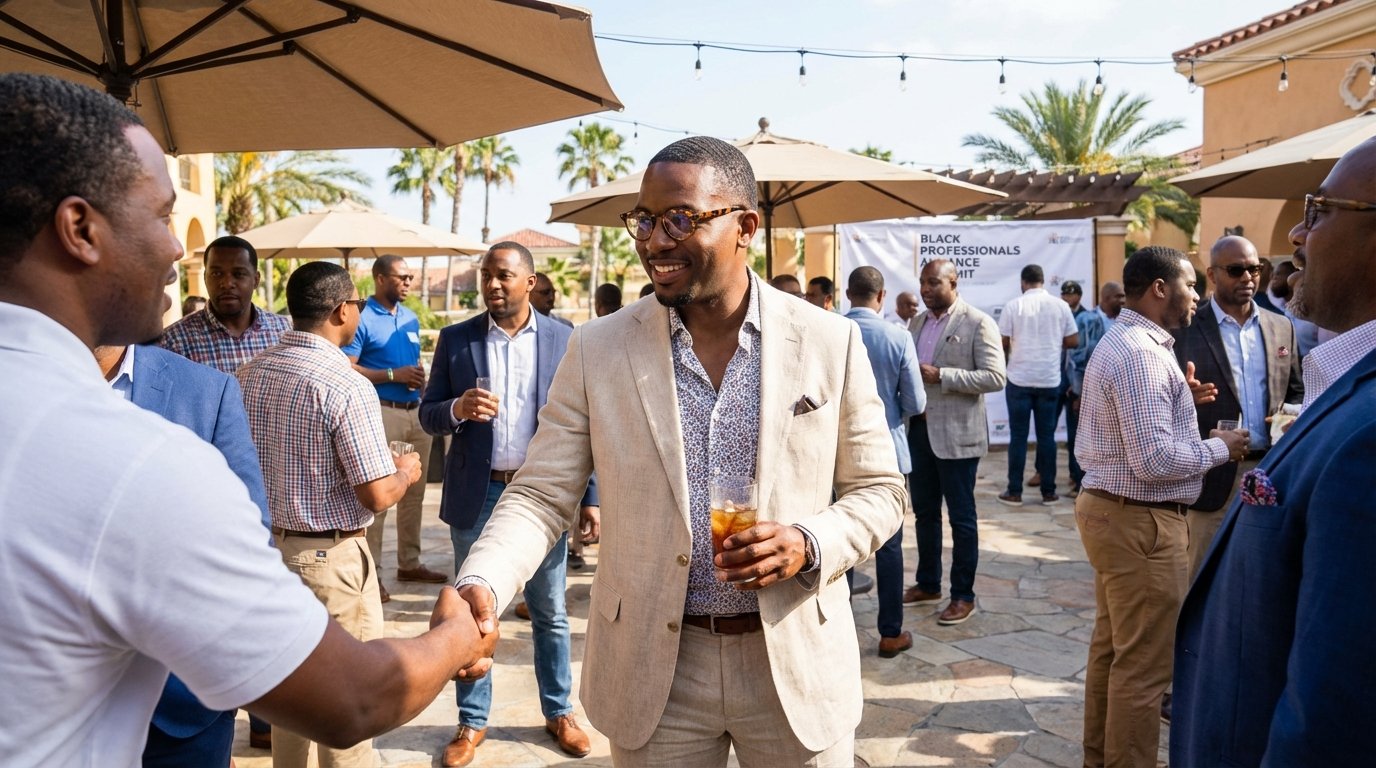
The Business Case: Texture creates visual distinction in spaces where everyone defaults to identical solid suits. In client meetings and networking events, being memorable without being inappropriate gives you an edge. People remember the sharp brother in the interesting jacket, not the fifth guy in a navy suit.
Trend 2: Strategic Color Beyond Navy and Charcoal
Black professionals are expanding their color palettes beyond the traditional trinity of navy, charcoal, and black. The keyword is strategic—this isn’t about peacocking, it’s about intentional color choices that command attention while maintaining authority.
What It Looks Like: Deep burgundy suits for evening events. Rich olive or forest green blazers for business casual contexts. Camel or tobacco brown suits for daytime meetings. Dusty blue or slate grey alternatives to standard navy.
Why It Works: Color psychology is real. Different hues convey different messages and evoke different responses. Burgundy suggests confidence and power. Olive conveys stability and approachability. Brown communicates warmth and reliability. Navy says traditional authority, but Green says contemporary leadership.
For Black men specifically, color choices that complement deeper skin tones create visual harmony that standard corporate colors don’t always achieve. A rich brown suit against brown skin creates sophisticated tonal dressing that photographs beautifully and commands attention in person.
How to Execute: If your workplace is conservative, introduce color through blazers first. A forest green blazer with charcoal trousers maintains professionalism while showing personality. Graduate to full suits in unexpected colors for client dinners, conferences, or contexts where you’re representing your company externally.
The Cultural Connection: Color in professional dress also allows subtle nods to cultural heritage. Earth tones reference African aesthetics without requiring explicit traditional dress. Rich jewel tones connect to Black church traditions of Sunday best. These aren’t costumes—they’re contemporary expressions of cultural continuity.
Trend 3: The Elevated Casual Blazer
The rigid separation between business and casual has dissolved, especially in tech, creative, and entrepreneurial sectors. The elevated casual blazer—structured enough for meetings, stylish enough for after-hours—has become essential.
What It Looks Like: Unstructured or deconstructed blazers without heavy padding. Knit blazers that function like cardigans but look like sport coats. Textured cotton or linen-blend jackets that work over everything from dress shirts to well-chosen t-shirts.
Why It Works: Modern business often requires code-switching between formal presentations, casual brainstorms, client dinners, and social events. A blazer that transitions seamlessly across these contexts eliminates wardrobe logistics while maintaining polish.
The unstructured approach also offers comfort advantages. Less padding means better drape, easier movement, and year-round wearability. For Black men with athletic builds, deconstructed jackets accommodate broader shoulders and tapered waists better than rigid traditional construction.
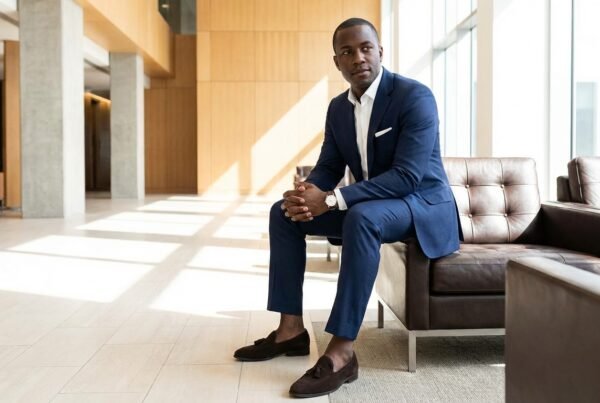
How to Execute: Invest in one exceptional casual blazer in navy or charcoal. Pair it with dark jeans and leather sneakers for smart casual. Switch to dress trousers and loafers for business casual. Add a tie and pocket square when the situation calls for more formality. One piece, multiple contexts.
The Lifestyle Shift: This trend reflects how business actually happens now—over lunch, during golf, at networking happy hours, through Zoom calls from home offices. Clothing that works across contexts matches how professionals actually live rather than how corporate dress codes imagine they should.
Trend 4: Statement Footwear That Still Means Business
Footwear has emerged as the primary avenue for personal expression in professional dress. Black businessmen are leveraging this opportunity with sophisticated choices that balance distinction and appropriateness.
What It Looks Like: Monk strap dress shoes instead of standard oxfords. Cognac or burgundy leather instead of only black. Chelsea boots for business casual contexts. Loafers with interesting textures—suede, woven leather, or subtle patterns. High-quality leather sneakers (yes, sneakers) for creative and tech environments.
Why It Works: Footwear sits at the intersection of visibility and subtlety. It’s noticed without being the first thing people see. Quality shoes signal attention to detail and investment in presentation. For Black professionals, distinctive footwear becomes a conversation starter and a credibility builder—”those are excellent shoes” opens doors.
How to Execute: Master the basics first: black cap-toe oxfords, brown brogues, quality loafers in both black and brown. Then experiment: double monk straps in cognac, Chelsea boots in chocolate suede, penny loafers in cordovan. Each adds personality while maintaining professionalism.
For environments accepting of sneakers (tech, creative, start-up culture), invest in legitimate luxury or artisan sneakers—Common Projects, Koio, Greats—not athletic shoes. The distinction matters.
The Investment Perspective: Quality footwear lasts. A $400 pair of Goodyear-welted dress shoes worn twice weekly will outlast five pairs of $80 shoes. For professionals building wealth, this isn’t extravagance—it’s mathematics. Plus, the confidence boost from wearing exceptional shoes translates to presence in meetings and presentations.
Trend 5: Accessorizing with Intention
Black businessmen are embracing accessories as tools for personal branding rather than afterthoughts. Watches, pocket squares, tie bars, cufflinks, and even eyewear have become strategic choices that reinforce professional identity.
What It Looks Like: Pocket squares in complementary patterns rather than matching tie sets. Watches that make statements—whether vintage pieces with history, modern designs with presence, or smart watches in premium finishes. Subtle jewelry—wedding bands with interesting details, signet rings, simple chains or bracelets that reference cultural heritage. Quality leather goods that coordinate across the briefcase, belt, and shoes.
Why It Works: Accessories create cohesion. When your watch leather matches your shoes, your pocket square complements your tie, your belt coordinates with your briefcase—you project intentionality. That attention to detail translates unconsciously to perceptions of how you approach work.
For Black professionals, accessories also offer opportunities to signal cultural connections and personal values. An African-inspired cufflink pattern, a watch from a Black-owned brand, a pocket square in Pan-African colors—these aren’t political statements, they’re personal ones.
How to Execute: Start with quality over quantity. One exceptional watch worn daily beats five mediocre ones rotated randomly. A small collection of silk pocket squares in various patterns provides endless combinations. Invest in a leather briefcase or messenger bag that will age beautifully and last for decades.
The Cultural Angle: For Black men, accessories can honor heritage while maintaining contemporary professionalism. Kente patterns adapted to modern pocket squares. Cowrie shell cufflinks. Watches with African diaspora significance. These pieces tell your story without requiring explanation.
Trend 6: Fit as Non-Negotiable
Perhaps the most significant trend isn’t about specific garments or colors—it’s the recognition that fit trumps everything else. Black businessmen are prioritizing tailoring and proper fit over brand names or price points.
What It Looks Like: Suits and blazers that account for athletic builds common among Black men—accommodating broader shoulders without excess fabric through the torso. Trousers with an appropriate rise that sit at the natural waist rather than sagging. Shirts with enough room in the chest and arms without billowing at the waist. Sleeve lengths that hit precisely at the wrist bone.
Why It Works: Ill-fitting clothes undermine credibility regardless of quality or cost. A $300 suit that fits perfectly looks better than a $2,000 suit that doesn’t. For Black men who may face unconscious bias, eliminating any excuse for dismissal—including sloppy fit—removes barriers to being taken seriously.
Proper fit also projects confidence. When clothes fit well, you move naturally, sit comfortably, and forget about your appearance. That unselfconsciousness reads as assurance to everyone around you.
How to Execute: Find a good tailor and build a relationship. Not everything needs tailoring, but anything you’ll wear to important meetings, presentations, or events should fit like it was made for you—because once tailored, it essentially was.
Learn the signs of proper fit: jacket shoulders align with your natural shoulders, no pulling across the back, sleeves show a quarter-inch of shirt cuff, trousers break once at most on shoes, shirts button comfortably across the chest without gaping.
The Practical Reality: Many off-the-rack lines aren’t cut for bodies that deviate from narrow European proportions. Black men often have different shoulder-to-waist ratios, different leg lengths relative to torso, and different overall builds. Tailoring corrects these mismatches and ensures clothes enhance rather than fight your natural physique.
Trend 7: Heritage Brands and Black-Owned Labels
A quiet but powerful trend is the intentional support of Black-owned fashion brands and the celebration of heritage labels with cultural significance.
What It Looks Like: Incorporating pieces from designers like Fear of God Essentials, Pyer Moss, or Telfar into professional wardrobes. Wearing heritage brands with Black cultural connections—Clarks (significant in Caribbean and Jamaican culture), certain sneaker collaborations with Black designers, and watches from Black-owned companies.
Why It Works: Where you spend your money reflects your values. Supporting Black-owned businesses while looking exceptional in professional contexts demonstrates that cultural pride and professional success coexist naturally. It also creates conversation opportunities that build relationships—”That’s a great piece, who makes it?” becomes a chance to discuss Black entrepreneurship and economic empowerment.
How to Execute: Research Black-owned brands in your price range and aesthetic. Start with one investment piece—a blazer, a coat, quality footwear. Wear it proudly. Share the story when asked. Gradually build a wardrobe that reflects both your professional needs and your commitment to economic empowerment.
The Economic Impact: Black professionals earn trillions collectively. Directing even a fraction of that spending power toward Black-owned fashion brands creates jobs, builds wealth within the community, and ensures future generations have more options for culturally connected professional dress.
Trend 8: The Return of Formal Accessories
Hats, lapel pins, tie bars, and other traditional accessories are experiencing a renaissance among Black professionals who recognize their power to create distinction.
What It Looks Like: Fedoras and pork pie hats for special events. Lapel pins that signal organizational affiliations or personal values. Quality tie bars that serve a function while adding detail. Boutonnières for weddings and formal events. Dress handkerchiefs are actually used as functional accessories.
Why It Works: These pieces connect contemporary professional dress to historical Black elegance—the Harlem Renaissance, Civil Rights era leaders, jazz legends who understood presentation as performance. Wearing them well signals cultural literacy and appreciation for sartorial history.
They also create conversation and connection. A well-chosen lapel pin can identify you to others who share your affiliations. A quality hat suggests attention to detail and willingness to stand out appropriately.
How to Execute: Start simple. A classic lapel pin for your fraternity, professional organization, or cause you support. A quality tie bar for formal presentations. Build from there as comfort grows. The key is wearing these pieces with confidence—they work when you believe they work.
The Cultural Thread: Black men have always understood that looking sharp is a form of resistance, respectability, and self-respect. These accessories connect to that lineage while functioning perfectly in contemporary contexts.
Practical Application: Building the Modern Professional Wardrobe
Understanding trends matters less than knowing how to implement them. Here’s a strategic approach to building a professional wardrobe that reflects these shifts:
Foundation First: Establish your base before experimenting. You need:
- Two excellent suits in navy and charcoal that fit impeccably
- Three quality dress shirts in white, light blue, and a subtle pattern
- Two pairs of dress shoes: black oxfords and brown brogues
- One versatile blazer that works casual or formal
- Quality belt and watch that work across contexts
Then Add Distinction: Once the foundation exists, introduce:
- A suit in an unexpected color (burgundy, olive, tobacco)
- Textured blazer or sport coat
- Statement footwear (monk straps, Chelsea boots, interesting loafers)
- Quality accessories (pocket squares, better watch, lapel pins)
- Piece from a Black-owned brand
Context Matters: Your industry and specific role determine how quickly you can adopt these trends. Conservative finance or law? Move slower, focus on texture and fit over color. Tech or creative? Embrace casual blazers and statement footwear immediately. Entrepreneur? The world is yours—dress the room you want to be in.
Investment Strategy: Quality over quantity always wins. One $600 suit that fits perfectly beats three $200 suits that don’t. Build slowly with pieces you love rather than quickly with pieces you’ll replace.
The Bigger Picture: Style as Strategic Asset
For Black business men, professional style isn’t superficial—it’s strategic. In spaces where you may be the only or one of the few, how you present yourself shapes immediate perceptions and long-term credibility. Getting it right removes barriers. Getting it exceptionally creates advantages.
These trends reflect broader cultural shifts. Black professionals are claiming space to be fully themselves—culturally connected, individually expressive, undeniably excellent. The clothes are tools in that claiming, visual declarations that professionalism and cultural identity coexist naturally.
The old rules said assimilate to succeed. The new reality says distinguish yourself to lead. Black businessmen embracing these style trends aren’t abandoning professionalism—they’re expanding its definition to include them authentically. That expansion benefits everyone by proving that excellence wears many faces, sounds different voices, and yes, dresses in more interesting suits.