
Money talks, but true wealth whispers. For Black men who’ve achieved financial success in their mid-30s to 40s, professional style in 2025-2026 isn’t about flash—it’s about mastery. The new aesthetic rejects logo-heavy luxury and hyper-tailored rigidity in favor of something far more sophisticated: relaxed confidence expressed through impeccable fabrics, precise fit, and cultural authenticity.
This is dressing for the boardroom, the private flight, the investor meeting, and the Michelin-starred dinner, all without changing clothes in between. It’s understanding that when your net worth speaks for itself, your wardrobe can focus on substance over spectacle.
The Shift: From Tight to Right
The days of constricting, armor-like suits are over. Contemporary professional style for affluent Black men features comfort-driven silhouettes that convey success without compromising ease. This isn’t about looking sloppy—it’s about appearing so secure in your position that you don’t need uncomfortable clothes to prove anything.
The New Proportions: Jackets now feature soft, natural shoulders instead of rigid padding. Trousers offer room through the thigh and adopt straight or slightly wider legs rather than the ankle-strangling cuts that dominated the 2010s. Double-breasted blazers return, but constructed in softer fabrics that drape rather than constrain.
This shift accommodates reality. Successful Black men are often athletic, with builds that traditional European tailoring never considered. The new relaxed proportions work with broader shoulders, developed chests, and powerful legs instead of fighting against them.
Why This Matters: When you’re moving between time zones, taking calls from the back of a Maybach, or transitioning from a board meeting to courtside seats, your clothes need to move with you. Rigid construction restricts. Soft tailoring liberates while maintaining polish.
Quiet Luxury: The Anti-Logo Movement
Logo-heavy luxury served its purpose—signaling arrival, claiming space, demanding recognition. But there’s an evolution happening among wealthy Black professionals: the shift from announcement to assurance.
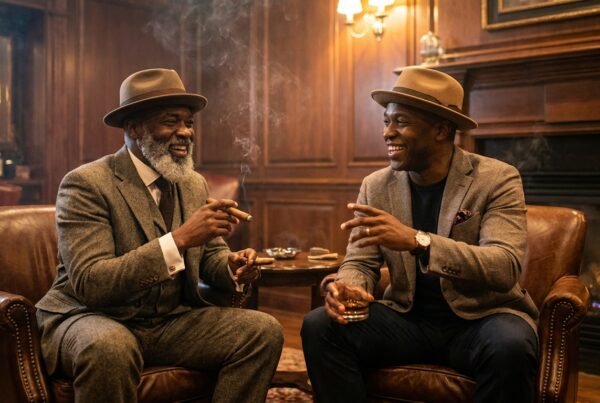
What Quiet Luxury Looks Like: Cashmere knit polos with no visible branding. Tailored trousers in exceptional fabrics without loud patterns. Blazers constructed from light tweed or premium cotton that feel expensive to touch but don’t scream designer from across a room. Shoes crafted from buttery leather with construction quality visible to those who know, invisible to those who don’t.
The markers of quality shift from external (logos, obvious hardware, flashy details) to internal (hand-stitched buttonholes, fully canvassed construction, natural materials). Those who understand quality recognize it immediately. Those who don’t weren’t the intended audience anyway.
The Cultural Context: For Black men specifically, this represents freedom—the ability to dress for yourself rather than against stereotypes. No longer needing to “prove” legitimacy through visible luxury brands. The confidence to let your presence, expertise, and actual wealth speak while your clothes simply enhance rather than announce.
Color Psychology: Earth Tones and Strategic Contrast
The 2025-2026 palette abandons bright, attention-seeking colors for sophisticated neutrals that flatter deeper skin tones while projecting authority.
The Foundation: Warm Neutrals
Tobacco brown, camel, chocolate, olive, and various shades of beige dominate the contemporary palette. These earth tones create visual harmony with Black skin, offering richness without the starkness of pure black or the blandness of conventional gray.
A tobacco suit against brown skin creates tonal sophistication that photographs beautifully and reads as expensive in person. Camel trousers with a chocolate knit polo deliver warmth and approachability while maintaining executive presence. Olive blazers suggest contemporary leadership rather than traditional corporate conformity.
Strategic Color Deployment:
The new approach builds outfits around neutral foundations, then introduces color strategically:
- Tonal Dressing: All browns, all navy, or all charcoal, with interest created through texture variation rather than color contrast. A chocolate suede loafer, tobacco wool trousers, and caramel cashmere polo read cohesive and intentional.
- High-Contrast Minimal: Black, blue, and white combined in clean, simple ways. Navy blazer, white knit polo, black trousers, white sneakers. Sharp without being loud.
- Accent Points: Neutral base with a single pop—a burnt orange pocket square, deep burgundy loafers, or forest green scarf. One statement per outfit, maximum.
Why Earth Tones Win: Beyond aesthetics, warm neutrals travel well across seasons and contexts. The same tobacco blazer works in Miami in February and Aspen in December. Beige and brown pieces layer seamlessly, creating versatile wardrobes that justify their cost through usage rather than sitting in closets.
Texture: The Wealth Indicator
When colors trend neutral, and silhouettes relax, texture becomes the differentiator between expensive and merely adequate.
The Texture Toolkit:
Knits Over Wovens: Fine-gauge sweaters, textured polos, and cashmere turtlenecks replace flat dress shirts for many occasions. Knits offer visual depth, comfortable wear, and inherent luxury when executed in quality materials. A charcoal cashmere turtleneck under a navy blazer signals wealth more effectively than a logo’d shirt ever could.
Elevated Suiting Fabrics: Light tweed, soft flannel, and natural wool replace standard worsted. These fabrics catch light differently, age gracefully, and feel premium to the touch. A light tweed blazer in tobacco reads contemporary and approachable while maintaining formality.
Touchable Accessories: Suede loafers instead of shiny leather. Nubuck sneakers rather than synthetic. Grainy leather belts and bags that develop character with use. Each tactile choice compounds to create an overall impression of quality.
The Strategic Advantage: Texture allows neutral outfits to avoid monotony. An all-navy look becomes interesting when combining smooth wool trousers, a ribbed knit polo, and suede loafers. The eye registers variety through texture even when color remains consistent.
The Core Wardrobe: Elevated Essentials
Wealthy Black professionals need wardrobes that work as hard as they do—versatile pieces that handle multiple contexts without requiring massive closets or constant shopping.
The Unstructured Blazer
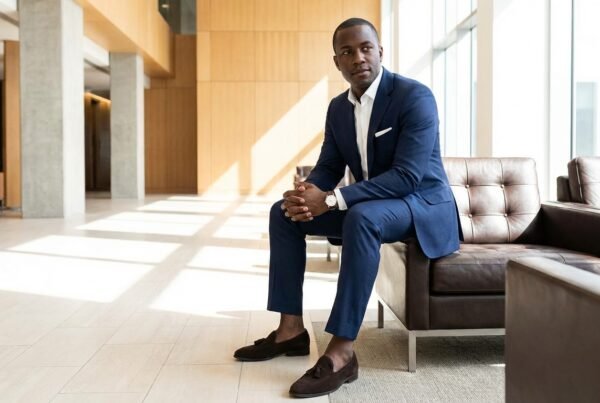
This is your most valuable piece. Unstructured or minimally constructed blazers in navy, brown, or olive work over everything from dress trousers to dark jeans. The lack of heavy padding means comfort during travel and the ability to layer underneath during colder months.
Investment Approach: Own three exceptional unstructured blazers rather than ten mediocre sport coats. Navy in a light wool for year-round use. Tobacco in a cotton or linen blend for warm weather. Charcoal in soft flannel for cold seasons. Each should cost what you’d spend on a weekend trip—they’ll get more use and last longer.
Premium Trousers
Wool trousers in beige, stone, gray, and brown form your foundation. These aren’t your father’s dress pants—they feature slightly wider legs, often with pleats, and sit at the natural waist for proper proportion.
Add one pair of impeccably clean dark jeans (no distressing, no fading, perfect fit) for contexts where denim works. The keyword is “clean”—these should look like they cost what they did.
Knit Polos and Elevated Tops
Quality knit polos in merino or cashmere replace both casual t-shirts and formal dress shirts for many situations. They’re refined enough for business casual, comfortable enough for transcontinental flights, and versatile enough to work under blazers or worn alone.
Supplement with fine-gauge turtlenecks, Oxford cloth shirts in neutral tones, and genuinely exceptional t-shirts in premium cotton or silk blends. Each top should feel luxurious and fit like it was made for your body—because at this level, it should be tailored even if it wasn’t custom.
The Layering System
Lightweight cashmere or merino sweaters, refined cardigans, and quality outerwear create visual interest and handle temperature variation. A camel cashmere crewneck over a white oxford under a navy blazer provides three layers of texture and tone that photograph well and transition across settings.
Footwear: Foundation of the Look
Shoes make or break every outfit, and for wealthy Black professionals, they’re often the first thing other successful people notice.
The Loafer Strategy
High-end loafers—penny, tassel, or horsebit styles—in brown, burgundy, and black should anchor your footwear rotation. These work with everything from suits to smart jeans, travel well, and last decades with proper care.
Cultural Connection: Consider Black-owned brands like Blackstock & Weber, which produce luxury loafers specifically designed with Black men’s aesthetic preferences and foot shapes in mind. Supporting Black-owned businesses while getting exceptional quality isn’t ca ompromise—it’s an alignment of values and self-interest.
The Minimal Sneaker
For travel, casual meetings, and off-duty executive moments, minimal leather or suede sneakers in white, cream, or muted tones maintain polish without formality. These aren’t athletic shoes—they’re luxury sneakers constructed like dress shoes but styled casually.
The key is restraint. One or two pairs of exceptional minimal sneakers outperform a closet full of limited-edition athletic shoes for professional contexts.
Seasonal Boots
Chelsea boots or desert boots in suede or matte leather handle colder months while maintaining the refined aesthetic. Chocolate suede Chelsea boots under charcoal trousers create sophistication without stuffiness.
The Quality Principle: At this level, footwear should cost what it costs. A $600 pair of hand-constructed loafers worn twice weekly for five years costs less per wear than $150 department store shoes replaced annually. Plus, quality shoes can be resoled and maintained, making them genuinely sustainable luxury.
Accessories: Restraint as Status
Wealthy Black men face a particular challenge with accessories—the need to signal success without triggering stereotypes about “flashy” or “excessive” display. The solution is strategic minimalism.
The Watch Question
A quality watch on a leather or metal band signals attention to detail without screaming for attention. The trend moves away from oversized sport watches toward classic proportions—38-42mm cases in steel, gold, or two-tone.
For wealthy professionals, this often means choosing between heritage brands with cultural significance or contemporary independents with exceptional craft. Either works if the watch fits your wrist properly and complements your overall aesthetic.
Jewelry Restraint
Simple chains, rings, or bracelets in gold or warm metals complement earth-toned wardrobes. The rule: less is more, but what you wear should be real. Better one exceptional piece than multiple mediocre items.
Wedding bands can be statement pieces—interesting metal work, unique finishes, or custom design. Signet rings connect to heritage. Simple chains reference cultural tradition without costume.
The Leather Goods Standard
Belts must match shoe color closely—this isn’t optional. Brown shoes require brown belts in the same tone. Black shoes demand black belts. The coordination signals attention to detail that translates unconsciously to perceptions of professional competency.
Bags, briefcases, and small leather goods should prioritize quality over branding. A well-crafted leather messenger bag in chocolate or tobacco without logos conveys more wealth than a logo-covered designer piece that announces trying too hard.
Grooming: The Non-Negotiable Foundation
No amount of expensive clothing compensates for poor grooming. For Black men specifically, this means maintaining hair, skin, and facial hair with the same intentionality applied to wardrobe.
The Grooming Investment
Regular barber appointments aren’t a luxury—they’re baseline. Whether maintaining a close crop, a shaped beard, styled locs, or any other look, consistency matters. Your hair should always appear intentionally maintained, never accidentally neglected.
Skincare transcends vanity—it’s presentation management. Moisturizer, sunscreen, and basic skin care prevent ashy skin, uneven tone, and premature aging. Products formulated for Black skin address specific needs rather than forcing generic solutions.
The Fit Factor
Perfect grooming multiplies the impact of a perfect fit. Clothes tailored to your actual body—trousers hemmed correctly, sleeves hitting at the wrist bone, jackets sitting cleanly through shoulders and chest—project competence and attention to detail.
At this income level, every piece should be tailored. Not custom necessarily, but adjusted. The $300 difference between off-the-rack and properly tailored transforms a good garment into an excellent one.
Cultural Authenticity: Black-Owned Brands
Supporting Black-owned fashion brands isn’t charity—it’s strategic alignment of quality, cultural understanding, and economic empowerment.
Why This Matters Economically
Black-owned luxury brands understand Black male bodies, aesthetics, and cultural context in ways many European heritage brands don’t. They’re designing for our proportions, our preferences, our lives. Supporting them creates more options for future generations while ensuring current excellence.
Categories to Explore
Luxury Streetwear and Elevated Basics: Brands like Vante, A-Cold-Wall*, and Golf le Fleur bridge street culture and high fashion, creating pieces that work in executive casual contexts while maintaining cultural authenticity.
Designer Menswear and Tailoring: Emmy Kasbit, Terry Corbett, Bianca Saunders, and Brett Johnson produce tailoring and refined menswear specifically informed by Black aesthetics and cultural references. These aren’t “Black versions” of European design—they’re original creative visions that happen to come from Black designers.
Footwear and Accessories: Blackstock & Weber for luxury loafers. ASHYA for travel bags and leather goods. These brands deliver quality that justifies premium pricing while ensuring your money circulates within the community.
The Investment Perspective: Building relationships with Black-owned brands now positions you as a founding customer rather than a late adopter. As these brands scale and gain broader recognition, you’re already established, often with access to exclusive pieces and early releases.
Practical Application: Building the Wealthy Executive Wardrobe
Theory matters less than execution. Here’s how to actually implement these trends:
Phase One: Foundation (Months 1-3)
Invest in three exceptional blazers: navy unstructured, tobacco cotton blend, charcoal soft flannel. Budget $800-1,500 each from quality brands or Black-owned designers.
Add four pairs of premium trousers: beige wool, gray flannel, brown twill, and dark, clean jeans. Each tailored perfectly. Budget $300-600 per pair.
Acquire two pairs of luxury loafers (brown and black) and one pair of minimal sneakers. Budget $400-800 per pair.
Phase Two: Depth (Months 4-6)
Build top rotation: six knit polos in neutral tones, three quality turtlenecks, four exceptional t-shirts, two Oxford shirts. Focus on cashmere, merino, and premium cotton.
Add layering pieces: two cashmere sweaters, one refined cardigan, and quality outerwear appropriate to your climate.
Upgrade accessories: quality watch, three leather belts matching your shoes, and simple jewelry pieces that complement your aesthetic.
Phase Three: Refinement (Months 7-12)
Introduce texture variation: suede loafers, nubuck sneakers, textured blazers.
Expand color palette strategically: olive blazer, burgundy shoes, subtle patterned pieces that work within your neutral foundation.
Invest in seasonal pieces: Chelsea boots for winter, linen pieces for summer, versatile outerwear for travel.
The Budget Reality
This approach requires significant investment—$15,000-25,000 to build a complete wardrobe at this quality level. But consider the alternative: constantly buying and replacing cheaper items, never quite achieving the desired effect, accumulating closets full of “almost right” pieces.
One $1,200 blazer worn twice weekly for five years costs $4.60 per wear. Four $300 sport coats replaced every two years cost more and never look as good.
Styling Principles for Different Contexts
Board Meetings and Investor Presentations
Navy or charcoal unstructured suit (jacket and matching trousers), fine-gauge turtleneck or knit polo, brown or black loafers, minimal watch, leather belt matching shoes.
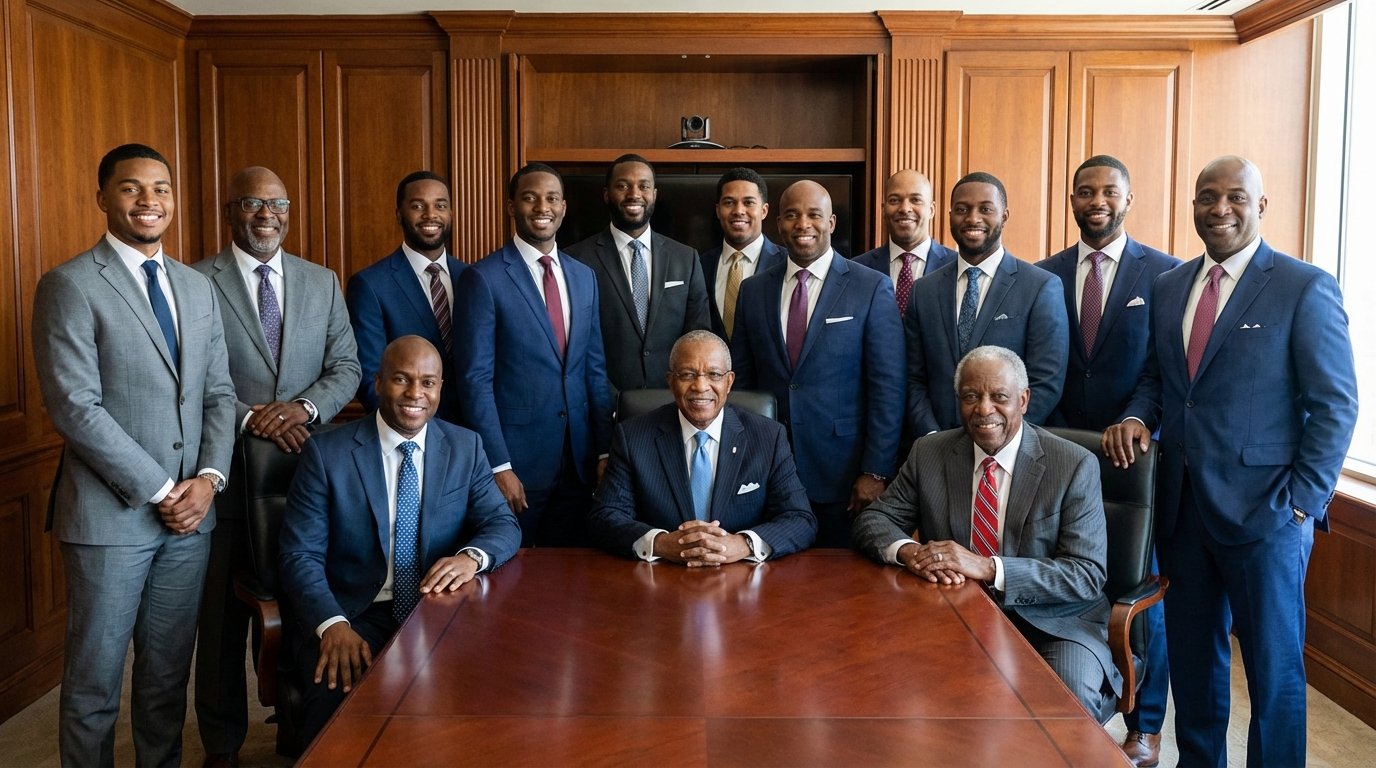
This maintains formality while embracing contemporary proportions. The turtleneck or polo instead of a shirt-and-tie signals confidence—you don’t need traditional power signals because your actual power is evident.
Client Dinners and Social-Business Events
Tobacco blazer, beige tailored trousers, white or cream knit polo, brown suede loafers, simple gold chain or ring.
Warm, approachable, clearly expensive without trying to impress. The suede and earth tones create a luxury that invites conversation rather than intimidating.
Travel and Casual Professional
Charcoal wool trousers, cashmere crewneck sweater, minimal white sneakers, quality leather messenger bag.
Comfortable enough for transcontinental flights, refined enough for arriving at meetings directly from the airport. The cashmere and tailored trousers prevent “dressed down” from becoming “sloppy.”
Weekend Executive
Dark clean jeans, olive unstructured blazer, quality t-shirt or casual knit, brown Chelsea boots or minimal sneakers.
Off-duty but never off-brand. Still clearly successful, just not currently working. The blazer elevates the jeans, the quality boots or sneakers prevent it from reading too casual.
The Psychology of Relaxed Luxury
This style evolution reflects broader cultural shifts. As Black men achieve wealth through entrepreneurship, entertainment, tech, finance, and other fields, the need to conform to traditional corporate aesthetics diminishes. You’re not trying to fit into someone else’s boardroom—you’re building your own.
What This Signals:
Security: You don’t need rigid suits and loud logos because your position is secure. The clothes serve you, not vice versa.
Cultural Confidence: You’re comfortable expressing Black aesthetic sensibilities—earth tones, texture, relaxed proportions—without apologizing or conforming to European standards.
Modern Masculinity: You prioritize comfort and authentic expression over performing traditional masculine rigidity. Soft fabrics and roomier cuts don’t diminish authority—they enhance it by demonstrating you’re comfortable enough in your power to prioritize your own comfort.
Generational Wealth Thinking: Investment in quality over trends signals long-term thinking. These pieces last, can be maintained, and potentially passed down. This is building a wardrobe as an asset, not consuming fashion as entertainment.
Common Mistakes to Avoid
Overcorrecting on Logos: Just because quiet luxury is trending doesn’t mean all branded items are forbidden. The issue isn’t logos—it’s logo dependency. One statement piece with visible branding in an otherwise understated outfit works. Head-to-toe branding looks insecure.
Ignoring Fit: No amount of expensive fabric compensates for poor fit. Every single piece must be tailored to your body. This is non-negotiable at this level.
Trend Chasing: These aren’t trends to adopt wholesale—they’re principles to interpret for your life, body, and context. Don’t abandon everything working for you to chase “relaxed luxury” if structured tailoring serves you better.
Forgetting Maintenance: Quality pieces require care. Shoe trees, proper storage, regular cleaning, and professional repairs when needed. Treating $1,000 shoes like $100 shoes wastes the investment.
Cultural Abandonment: Embracing quiet luxury doesn’t mean abandoning Black aesthetic traditions. Earth tones, gold jewelry, certain cuts, and proportions have cultural significance. The goal is refinement, not erasure.
The Future: Where This Goes Next
Style for wealthy Black men will continue evolving toward greater comfort, cultural authenticity, and individual expression. The relaxed luxury movement represents just one current expression of a larger trend: successful Black men defining their own aesthetic standards rather than conforming to inherited European norms.
Emerging Directions:
African Diaspora Fusion: Expect increasing incorporation of African design elements, fabrics, and silhouettes into contemporary professional dress. Not a costume, but a contemporary interpretation of cultural heritage.
Sustainable Luxury: As wealth concentrates, focus shifts to longevity and ethics. Brands demonstrating genuine sustainability and fair labor will gain an advantage among conscious consumers.
Technology Integration: Smart fabrics, performance materials, and technical innovation in traditionally formal pieces. Suits that regulate temperature, water-resistant luxury fabrics, and antimicrobial treatments in travel pieces.
Customization Standard: As Black-owned brands scale, expect more accessible made-to-measure and custom options. Technology enabling remote measurement and virtual fittings will democratize custom clothing.
The Bottom Line
Professional style for wealthy Black men in 2025-2026 centers on a simple principle: confidence expressed through quality, comfort, and cultural authenticity. The days of conforming to rigid corporate aesthetics or relying on logo-heavy luxury to signal success are over.
This evolution isn’t about abandoning professionalism—it’s about defining it on our terms. Relaxed silhouettes that accommodate Black bodies. Earth tones that complement Black skin. Textures that signal luxury without logos. Black-owned brands that understand our cultural context and aesthetic preferences.
The wardrobe becomes a tool rather than a costume. Clothes that move seamlessly between contexts without requiring changes. Pieces that last years rather than seasons. Brands that circulate wealth within the community while delivering exceptional quality.
Start with foundations: three great blazers, four perfect trousers, two luxury loafers. Build from there with intention. Focus on fit, fabric, and authentic expression rather than trends or logos. Invest in quality that justifies its cost through longevity and versatility.
Most importantly, remember that true wealth whispers. Your clothes should enhance your presence, not announce your bank account. When you’ve achieved real success, your wardrobe’s job is simple: get out of your way and let your accomplishments speak.